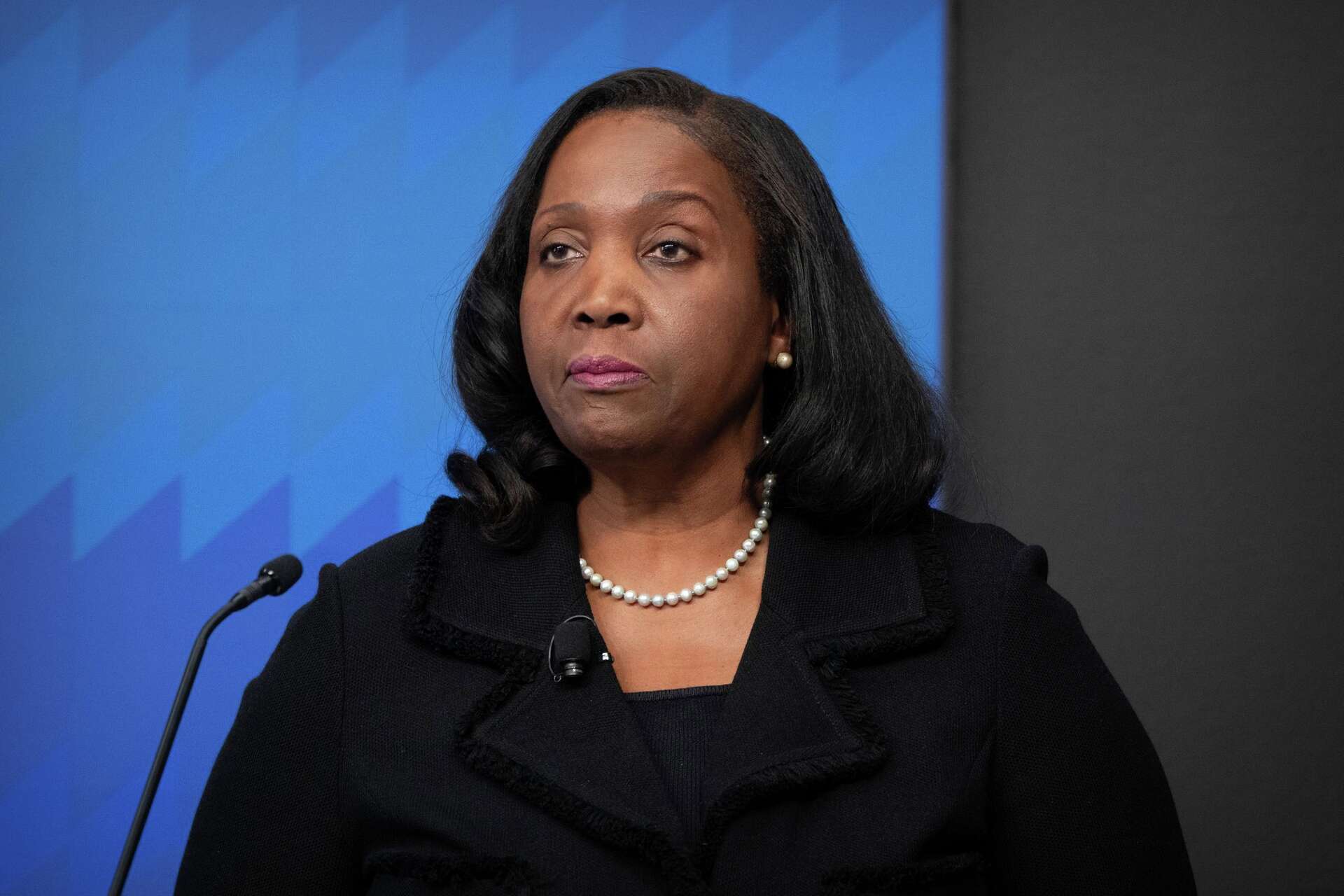
Dr. Lisa D. Cook
Biography, Accomplishments, Senate Confirmation, and Defense of Federal Reserve Independence
Executive Summary
Dr. Lisa DeNell Cook is an American economist and member of the Board of Governors of the Federal Reserve System. She made history in 2022 as the first Black woman to serve on the Federal Reserve Board of Governors. Her career spans academic economics, international development, federal economic policy, and central banking.
Cook’s path to the Federal Reserve was politically contentious. Her initial Senate confirmation in 2022 resulted in a 50–50 tie, requiring Vice President Kamala Harris to cast the deciding vote. She was subsequently confirmed to a full 14-year term in 2023 by a 51–47 Senate vote.
Her position later became the center of an important dispute over presidential power and Federal Reserve independence when President Donald Trump attempted to remove her in 2025. Cook challenged the action in federal court. On June 29, 2026, the Supreme Court ruled 5–4 to leave protections against her removal in place while the litigation continued, emphasizing the Federal Reserve’s distinctive history of independence and the statutory requirement that governors may be removed only “for cause.”
Early Life and Education
Lisa DeNell Cook grew up in Milledgeville, Georgia. Her early life coincided with school desegregation in the American South, and she and her sisters were among the first Black students to integrate local schools.
Cook later attended Spelman College, where she earned a bachelor’s degree in philosophy. She became a Marshall Scholar and studied philosophy, politics, and economics at Oxford University.
She ultimately earned her Ph.D. in economics from the University of California, Berkeley.
Her education eventually led her toward research concerning economic growth, innovation, financial institutions, entrepreneurship, and the historical relationship between discrimination and economic development.
Professional Career
Before joining the Federal Reserve, Cook developed a career combining academic research with government service.
She served as a professor of economics and international relations at Michigan State University and previously taught at Harvard University’s Kennedy School of Government. She was also a National Fellow at Stanford University’s Hoover Institution and a research associate at the National Bureau of Economic Research.
Cook also accumulated significant federal policy experience.
From 2000 to 2001, she served as a senior adviser on finance and development in the U.S. Treasury Department’s Office of International Affairs. From 2011 to 2012, she served as a senior economist on President Barack Obama’s Council of Economic Advisers.
Historic Appointment to the Federal Reserve
President Joe Biden nominated Cook to the Federal Reserve Board on January 13, 2022.
Her nomination was significant because confirmation would make her the first Black woman to serve on the Federal Reserve Board of Governors.
The confirmation process was unusually close.
The 2022 Senate Vote
On May 10, 2022, the Senate voted on Cook’s nomination.
Senate vote: 50 Yes — 50 No
Because the Senate was evenly divided, Vice President Kamala Harris exercised her constitutional authority as president of the Senate and cast the tie-breaking vote in Cook’s favor.
Cook was therefore confirmed.
The episode was especially notable because Cook’s nomination had encountered procedural difficulty before reaching final confirmation. An earlier April 2022 cloture attempt failed 47–51, and the Senate had previously voted 50–49 to discharge her nomination from the Banking Committee.
Cook took the oath of office on May 23, 2022, administered by Federal Reserve Chair Jerome Powell.
A Second Senate Confirmation
Cook’s first appointment filled an unexpired Federal Reserve term scheduled to end January 31, 2024.
President Biden subsequently nominated her for a complete 14-year term.
On September 6, 2023, the Senate again considered Cook’s nomination.
She was confirmed by a vote of 51–47.
The Senate had first voted 52–47 to invoke cloture and then confirmed Cook 51–47.
She was reappointed on September 8 and sworn in for her second term on September 13, 2023. Her current statutory term runs through January 31, 2038.
The two confirmations are an important part of Cook’s public record. She did not enter the Federal Reserve through an uncontested process: she survived an evenly divided Senate in 2022 and then secured confirmation again in 2023 for a full term.
Major Accomplishments
Historic Federal Reserve appointment. Cook became the first Black woman to serve on the Federal Reserve Board of Governors.
Long-term Federal Reserve appointment. After completing part of an unexpired term, she secured Senate confirmation for a full term extending through January 2038.
Federal economic-policy experience. Cook served in both the U.S. Treasury Department and the White House Council of Economic Advisers.
Academic leadership. She held academic and research positions associated with Michigan State University, Harvard University, Stanford University, and the National Bureau of Economic Research.
Development of future economists. From 2018 through 2021, she directed the American Economic Association’s Summer Training Program.
Research contributions. Her scholarship has addressed economic growth, innovation, financial institutions, entrepreneurship, and the economic consequences of discrimination and barriers to participation.
President Trump’s Attempt to Remove Cook
Cook faced another major challenge after Donald Trump returned to the presidency.
In August 2025, Federal Housing Finance Agency Director Bill Pulte publicly accused Cook of misconduct involving mortgage documents connected with properties she owned before joining the Federal Reserve.
President Trump subsequently announced that Cook should resign and then attempted to remove her from the Federal Reserve Board.
Cook disputed the allegations and challenged the attempted removal in federal court.
An important distinction is necessary: the Supreme Court did not determine that the underlying allegations against Cook were false. The litigation addressed whether the president could remove her under the circumstances and procedures presented to the courts.
Cook’s Response: Fight Through the Institutions
Cook’s response was primarily legal and institutional.
Instead of resigning, she filed suit and argued that the president’s action did not satisfy the Federal Reserve Act’s requirement that a governor may be removed only “for cause.”
She also argued that she had not received the procedural protections required before removal.
A federal district court blocked the attempted removal, and the Court of Appeals declined to suspend that protection. The dispute then reached the U.S. Supreme Court.
The case became larger than Cook herself because it raised a fundamental question:
Can a president effectively remove a Federal Reserve governor at will, or does the Federal Reserve Act meaningfully protect governors from presidential removal?
The Supreme Court Decision
On June 29, 2026, the Supreme Court ruled 5–4 against the Trump administration’s effort to remove Cook while the litigation proceeded.
The Court emphasized that Federal Reserve governors serve staggered 14-year terms and, under federal law, may be removed only “for cause.”
The Court rejected the government’s argument that the president’s determination of cause was effectively beyond judicial review. It concluded that the statutory protection could not simply be converted into the equivalent of at-will employment.
Importantly, the Court also stressed that the definition of “cause” must reflect the Federal Reserve’s distinctive historical role and independence.
Cook therefore remained a Federal Reserve governor.
The ruling did not resolve every underlying factual dispute. Rather, it preserved Cook’s position and addressed important principles concerning the procedures and legal threshold involved in removing a Federal Reserve governor.
A Career Defined by Institutional Tests
Cook’s career contains several episodes in which institutional processes determined whether she could continue forward.
In 2022, her Senate confirmation reached a 50–50 deadlock. The constitutional tie-breaking process resulted in her confirmation.
In 2023, she returned to the Senate and received confirmation for a full 14-year term by a 51–47 vote.
In 2025, President Trump attempted to remove her from office.
In 2026, the Supreme Court ruled 5–4 against allowing that removal to proceed under the circumstances before it.
These episodes illustrate the different institutional safeguards surrounding a Federal Reserve governor: presidential nomination, Senate confirmation, long statutory terms, “for cause” removal protection, and judicial review.
Conclusion
Dr. Lisa Cook’s career represents a significant chapter in the history of the Federal Reserve.
Her accomplishments extend beyond becoming the first Black woman on the Board. Her path included advanced economic scholarship, service in multiple parts of the federal government, two Senate confirmation processes, and participation in a major Supreme Court dispute concerning the independence of America’s central bank.
The 2022 confirmation is particularly notable. Cook’s nomination reached the narrowest possible Senate margin—50 votes for and 50 against—and required Vice President Kamala Harris to cast the deciding vote.
Four years later, Cook’s tenure faced another exceptionally narrow institutional decision: a 5–4 Supreme Court ruling concerning the Trump administration’s attempt to remove her.
Together, these events make Cook’s career not simply a story of individual achievement, but an important case study in the relationship among presidential power, Senate confirmation, central-bank independence, statutory protections, and the federal judiciary.

Leave a Reply