OX8 Journal | Technology, Business & Capital | October 21, 2026
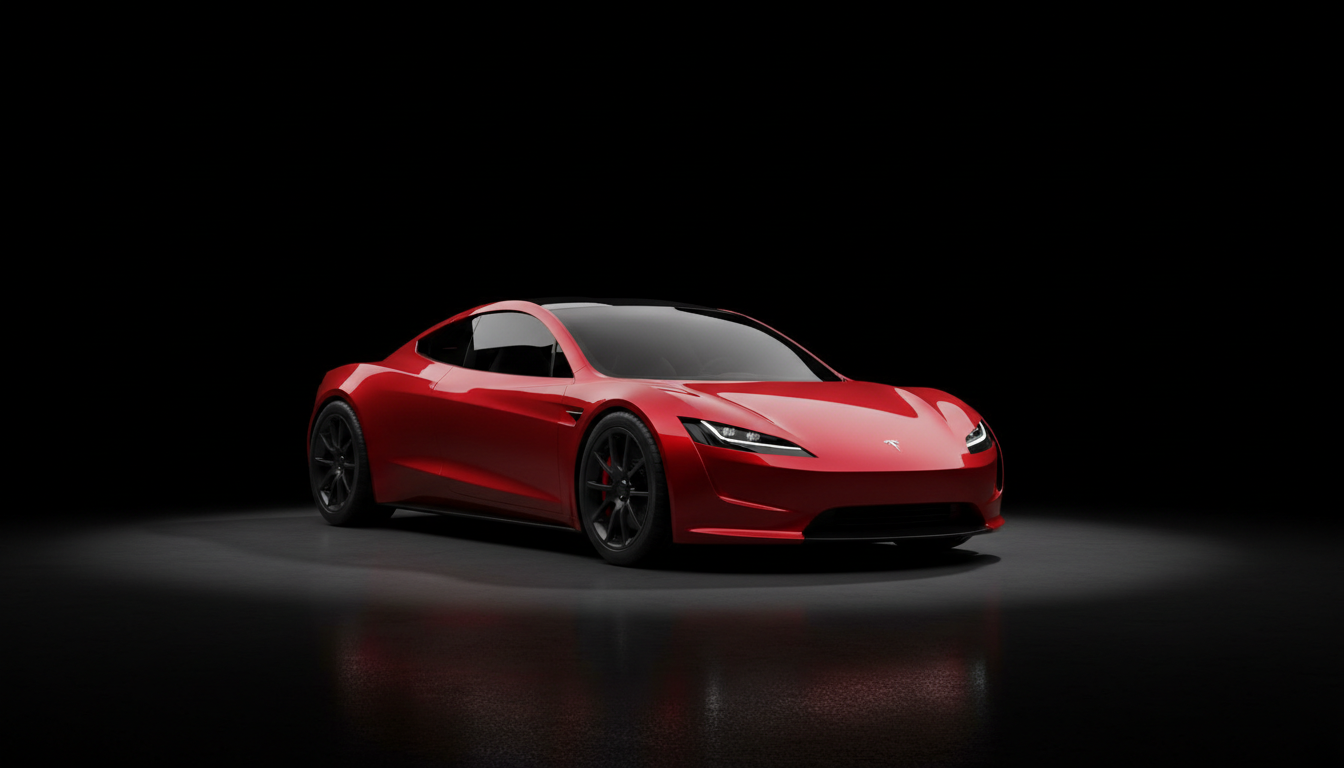
Two of Silicon Valley’s most influential executives found themselves in an unusual public confrontation over a vehicle that, years after its introduction, had still not reached customers. At the center were Tesla CEO Elon Musk, OpenAI CEO Sam Altman, a $50,000 reservation, and the long-awaited second-generation Tesla Roadster.
What began as a disagreement over a refund became another chapter in their rivalry. Yet beneath the exchange lies a more consequential question: How long should a company hold customer capital while repeatedly postponing delivery?
Seven Years, $50,000, and No Roadster
Tesla introduced its second-generation Roadster in November 2017, promising extraordinary acceleration, impressive range, and performance capable of challenging traditional supercars. The original production target was 2020.
In 2018, Altman reserved the vehicle with a $50,000 payment. By October 2025, more than seven years had passed without delivery. Altman publicly shared screenshots of his reservation and attempted cancellation, including an email returned as undeliverable. He said he had been excited about the car but that seven and a half years was a long wait.
When a Refund Became a Personal Feud
Musk responded that Tesla had resolved the matter and processed a refund within 24 hours, while also reviving his broader dispute with OpenAI. The personalities quickly overshadowed the customer-service issue. Yet whether a refund ultimately arrived promptly does not answer why a cancellation request initially failed to reach the company.
The standard should remain the same regardless of the customer: clear delivery expectations, accessible cancellation channels, and timely refunds.
Technology, Expectations, and the Roadster
Enthusiasm surrounding the Roadster reflects Tesla’s ability to capture attention with ambitious engineering. But a prototype demonstration, however compelling, is not the same as independently verified performance, scalable production, or customer delivery. Investors and reservation holders should distinguish technical possibility from commercial readiness.
The Financial Question: Who Benefits From the Waiting?
A $50,000 reservation is capital transferred to a manufacturer before a vehicle is delivered. That creates an opportunity cost for the customer, even when the principal is refundable.
For illustration, $50,000 compounded annually at a hypothetical 7% return for 7.5 years would grow to approximately $83,034, a potential gain of roughly $33,034. This is not a claim about Altman’s actual losses, Tesla’s returns on deposits, or the investment choices a customer would have made. It simply demonstrates that time has financial value.
For investors, the Roadster story raises three questions: How reliable are management’s production forecasts? How dependable are customer-facing systems? And how closely do promotional claims track commercially delivered products?
Innovation Does Not Eliminate Accountability
Musk’s achievements in electric vehicles and spaceflight are significant. Those accomplishments do not remove the need for scrutiny when deadlines slip. Likewise, Altman’s leadership of a rival AI company does not invalidate a consumer complaint. Accountability must not depend on the identity of the customer.
The OX8 Perspective: Capital Follows Evidence
The Roadster dispute illustrates the difference between vision and execution. Vision attracts attention. Execution establishes credibility. Repeated execution builds durable enterprise value.
A promise may attract capital, but only performance can justify keeping it.
The Roadster’s ultimate significance will not be decided by social-media exchanges between two technology executives. It will be determined by whether Tesla delivers a vehicle customers can purchase, drive, and support on economically sustainable terms.
OX8 editorial analysis. Financial figures are illustrative and are not investment advice.
Leave a Reply