
Bank of England Chief Economist Huw Pill said in an interview published November 14 that UK interest rates will probably need to rise further in 2027. He warned that sustained energy costs could feed into wages and a wider range of prices. The Monetary Policy Committee sets rates at each meeting. Financial Times interview · Reuters coverage
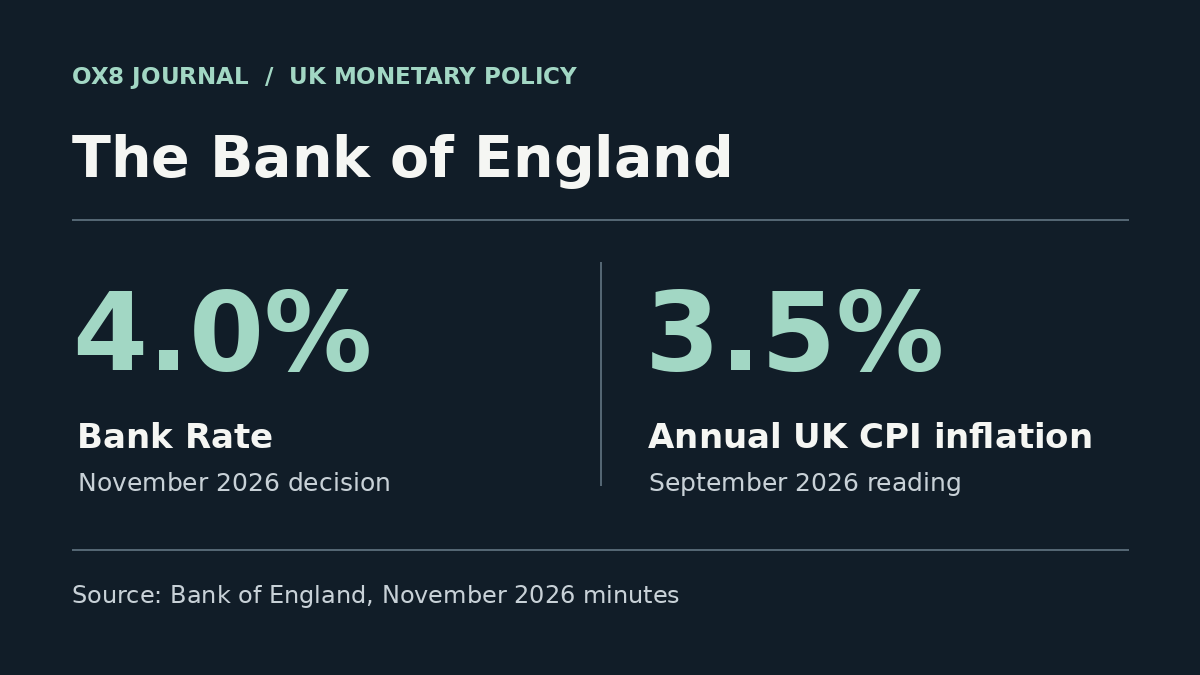
At its meeting ending November 4, the committee voted 8–1 to raise Bank Rate by a quarter percentage point to 4%. The dissenting member backed a larger increase to 4.25%. Annual UK consumer price inflation was 3.5% in September 2026. The Bank expects it to reach around 5% by mid-2027 and said evidence that higher energy costs had spread to other prices and wages was still limited. Bank of England minutes
Regular pay growth slows to 3.5%
The Office for National Statistics reported on November 17, 2026, that regular pay excluding bonuses grew 3.5% year over year in July–September, down from 3.7% in June–August. UK vacancies fell by 22,000 to an estimated 690,000 in August–October compared with May–July. The survey-based unemployment rate fell 0.3 percentage points from the previous quarter to 4.6%. The ONS said changes in who took part in the survey explain some of that decline. ONS labour market bulletin
What to watch
OX8 analysis. Slower regular pay growth and fewer job openings offer limited evidence that higher energy costs are feeding through to wages. The October inflation release on November 18 will show whether services prices are accelerating. Together, the pay and price data can help assess that risk before the Bank of England’s December 17 rate decision. ONS inflation release calendar · Bank of England decision dates


Leave a Reply