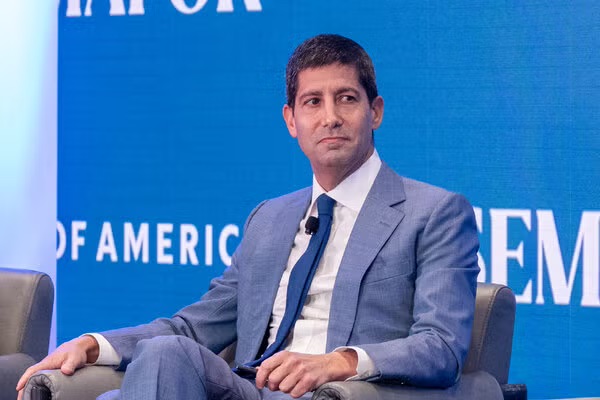
When Kevin Warsh became chairman of the Federal Reserve in July of 2026, he entered one of the most powerful economic positions in the world. But shortly before taking office, a financial transaction involving more than $100 million created a question that followed him into the chairmanship:
Who bought his investments?
That question became the focus of a public exchange between Warsh and Senator Elizabeth Warren of Massachusetts.
More Than $100 Million in Private Investments
Financial disclosures released during Warsh’s confirmation process showed that he possessed wealth well above $100 million, including substantial interests in private investment vehicles. Among the holdings attracting scrutiny were investments associated with the Juggernaut Fund and THSDFS LLC.
Warsh had previously worked as an adviser to billionaire investor Stanley Druckenmiller’s family office, Duquesne, and financial disclosures showed significant financial ties to private investments. Before Warsh’s confirmation, reporting described him as potentially the wealthiest Federal Reserve chair in modern history.
Warsh pledged to divest assets as necessary to satisfy federal ethics requirements before assuming leadership of the Federal Reserve.
He subsequently reported selling the bulk of the relevant holdings.
The “$100 Million Check”
The phrase “$100 million check” should not be interpreted literally as evidence that somebody simply handed Warsh a personal $100 million gift.
It was Senator Warren’s characterization of the proceeds Warsh received from selling more than $100 million worth of private investment interests as part of his divestiture.
During a July 2026 Senate Banking Committee exchange, Warren pressed Warsh to identify the purchaser or purchasers.
Her concern was straightforward: if an individual or institution with interests affected by Federal Reserve policy purchased such a large amount of assets from an incoming Fed chairman, the public might want to know the buyer’s identity and the terms of the transaction.
Warsh responded that he had complied with his agreement with the Office of Government Ethics and said he would continue making disclosures consistent with those requirements. He did not publicly identify the buyer or buyers during that exchange.
Why the Transaction Matters
The controversy is less about whether Warsh was permitted to sell his investments than about transparency surrounding an unusually large divestiture.
Federal Reserve decisions can influence interest rates, bond markets, equities, banking conditions, mortgages and the broader economy. The chair therefore occupies a position capable of affecting trillions of dollars in financial assets.
Federal ethics requirements are intended to reduce conflicts between officials’ private financial interests and their government responsibilities. Warsh’s divestitures were undertaken to bring his financial holdings into compliance with those requirements. Reuters reported that government rules did not require officials to disclose who purchased their financial assets.
That distinction is important.
There is currently a factual basis for saying that Warsh sold more than $100 million in private investments before taking office and did not publicly identify the buyer or buyers when Warren questioned him.
There is not, based on the available evidence, a factual basis for describing the transaction as a secret $100 million gift or payoff.
Warren’s Argument
Warren’s criticism centered on the possibility of conflicts of interest.
During Warsh’s confirmation process, she repeatedly sought additional information about his private holdings and later about their disposition. She argued that the public should know who participated in such a large transaction involving the incoming leader of the nation’s central bank.
Warsh’s position was that his obligations were governed by his ethics agreement and the Office of Government Ethics, and he maintained that he had fulfilled those obligations.
The disagreement therefore became partly a debate over the difference between legal disclosure requirements and broader public transparency.
A $100 Million Question
Kevin Warsh is now serving as chairman of the Federal Reserve. The Federal Reserve identifies him as chairman in 2026.
The central fact surrounding the controversy is remarkable enough without exaggeration: immediately before taking one of the most influential positions in global finance, Warsh had to dispose of private investments worth more than $100 million.
He says he complied with the government’s ethics requirements.
Senator Warren argues that compliance alone does not answer the larger transparency question.
And unless additional disclosure identifies the purchaser or purchasers, one question remains at the center of the controversy:
Who was on the other side of more than $100 million in transactions with the incoming chairman of the Federal Reserve?

Leave a Reply